UPI Yes, Website No: Why 2026 Is the Year Indian MSMEs Must Fix Their Online Presence
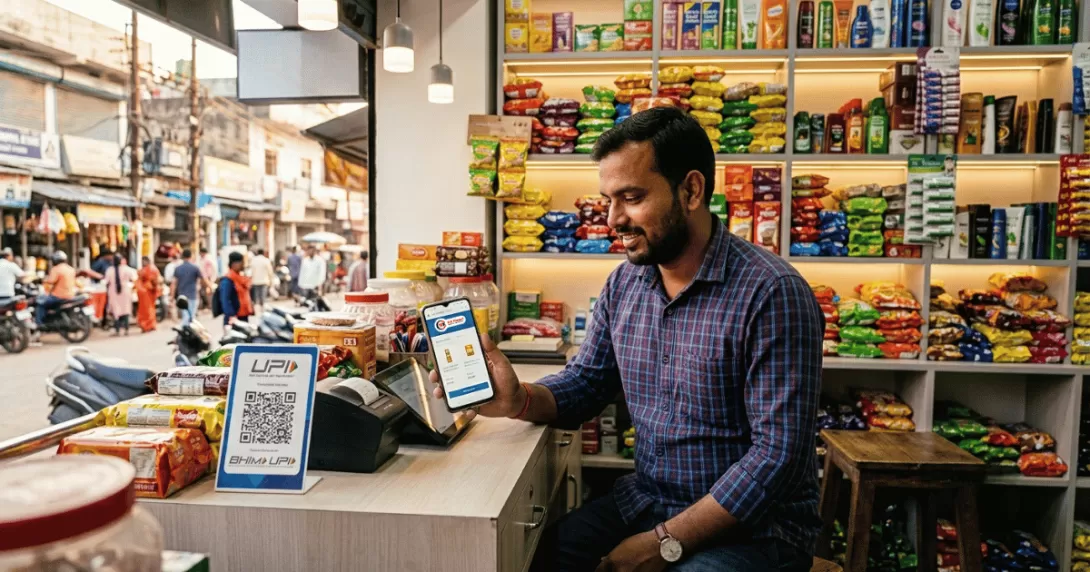
Walk into almost any shop in Ranchi, Jamshedpur or Dhanbad today and you'll see a UPI QR code taped to the counter. Now search that same shop on Google. In most cases: nothing. No website, no proper listing, no way for a new customer to find it.
The numbers back this up. A SIDBI survey reported in 2025 found that over 90% of Indian MSMEs now accept digital payments — but only about 13% actively use digital marketing or e-commerce to reach customers. In other words, most small businesses went digital for collecting money, not for attracting customers. We call it the "UPI-yes, website-no" gap.
This post explains why that gap quietly costs you sales, what has changed in 2026 that makes it urgent, and the cheapest realistic path to closing it.
The gap: digitally paid, digitally invisible
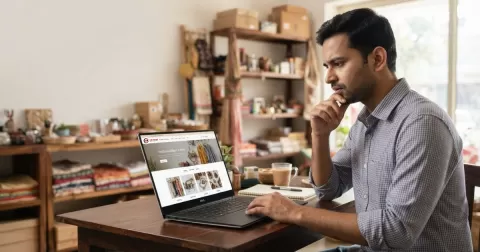
Accepting UPI feels like "going digital," but it only serves customers who are already standing in front of you. It does nothing for the customer two localities away who searched "tiles shop near me" or "CA in Ranchi" last night and picked one of your competitors — because your business simply didn't appear.
India now has 7.85 crore registered MSMEs (Udyam data as of February 2026, via IBEF). Almost all of them can take a digital payment. Very few can be discovered digitally. That's not a technology gap anymore — the tools are cheap and everywhere. It's a mindset gap: payments felt compulsory, presence still feels optional.
What changed in 2026: customers check before they call
Three shifts make this the wrong year to stay invisible:
1. Buyers now verify you online first
Whether it's a wholesale buyer, a bride's family choosing a caterer, or a company shortlisting a vendor — the first step is a search. If the search shows nothing, many buyers assume the business is too small, too informal, or no longer running. A website is no longer marketing; it's proof you exist.
2. Your competitors are moving
A CyberMedia Research (CMR) study from June 2026 found that 78% of Indian MSMEs now rank operational efficiency as their top priority, and 55% are looking at AI adoption. The businesses around you are professionalising. Meanwhile, PayNearby's MSME Digital Index 2026 reports 82% of small businesses say they're confident using digital tools. Confidence isn't the barrier it was five years ago — inaction is.
3. Formalisation pays
Digital records — including a proper online presence — increasingly support loan applications, government tenders (GeM), and partnerships. A business that can be verified online is easier to trust, easier to finance, and easier to buy from.
"But a website is costly" — the most outdated assumption in Indian business
This is the objection we hear most, and it's roughly ten years out of date. A clean, mobile-friendly business website in India today can start from a few thousand rupees — at S K Tiwari, starter websites begin at ₹5,000, and our free 1-page website program exists precisely for businesses taking their first step.
What actually costs money is what most owners don't need on day one: custom software, e-commerce with payment gateways, heavy animations. A first business website needs five things — who you are, what you sell, where you are, proof (photos, reviews), and a WhatsApp/call button. That's it.
We've published a full, honest price breakdown — including what's essential, what's optional, and the traps agencies use to inflate bills — in our guide: How much does a business website really cost in India in 2026?
Your 7-point "digitally findable" checklist
- Search yourself. Google your business name + city. If nothing owned by you appears on page one, you're invisible.
- Claim your Google Business Profile. Free, and the single fastest visibility win for a local business.
- Get a basic website live. One page is enough to start: services, photos, location, WhatsApp button.
- Use your own domain. yourbusiness.com beats a social-media-only presence for trust — and you own it.
- Put the website everywhere. Visiting card, WhatsApp profile, IndiaMART/Justdial listings, shop board.
- Collect reviews. Ask every happy customer for a Google review; it compounds.
- Check it on a phone. Most of your customers will only ever see your site on a mobile screen. If it's slow or broken there, fix that first.
The Jharkhand angle: less competition online, bigger reward
Here's the part that should excite a Tier-2/3 business owner rather than worry them. In Delhi or Bengaluru, showing up online means fighting hundreds of established competitors. In Ranchi, Hazaribagh, Bokaro or Deoghar, often none of your direct competitors have a proper website yet. The first tile shop, coaching centre, hospital or transporter in a locality to build real online presence tends to collect the searches for the whole locality.
We've written before about how Jharkhand businesses remain invisible on Google — and the flip side of that problem is a genuine head start for whoever moves first. The 13% who market online aren't 13% better than you. They just started.
Start small, but start
You don't need a ₹1 lakh website. You need a page that exists, loads fast on a phone, and lets a customer reach you in one tap. Grow it as the enquiries grow. That's how we've approached web development for 100+ projects over 10 years — including businesses that started with a single free page.
FAQ
My business runs fine on WhatsApp and word of mouth. Do I still need a website?
If you only ever want customers who already know you, no. But word of mouth now ends with a Google search — the referred customer checks you online before calling. A website converts referrals you're currently losing without knowing it.
Isn't a Google Business Profile or Instagram page enough?
They're excellent — and free — starting points, and you should have them. But they sit on rented land with rules you don't control. A website is the one online asset you own, and it makes every other listing (Google, IndiaMART, Justdial) more credible.
How much does a basic business website cost in India in 2026?
A clean starter website begins around ₹5,000; a fuller business site typically runs higher depending on pages and features. See our detailed breakdown in the 2026 website cost guide, and check whether you qualify for our free 1-page website.
How long does it take to build?
A basic 1–5 page business website is typically live within days to about two weeks, provided you share your content (photos, services, contact details) promptly. Larger or custom builds take longer.
Will a website alone bring me customers?
A website makes you findable and credible; visibility work (Google Business Profile, local SEO, reviews) brings the traffic. Do both — the checklist above is the order we recommend.
Close the gap this month
You solved digital payments. Presence is the easier half — and 2026 is the cheapest it has ever been to fix.
Free 15-minute consultation: tell us your business and city, and we'll tell you exactly what your first website should (and shouldn't) include — no jargon, no pressure. WhatsApp us at +91 91026 01040 or book a call.
Stats cited: SIDBI survey on MSME digital adoption (reported 2025); Udyam registration data as of February 2026 via IBEF; CyberMedia Research study, June 2026; PayNearby MSME Digital Index 2026. Figures are as reported by these sources — verify current data before quoting in formal documents.